




Table Of Contents
Hidden water leaks are one of the more frustrating plumbing problems because the damage is already happening before you realise anything is wrong. Unlike a burst pipe or an overflowing toilet, a concealed leak works quietly inside your walls, under your floors, or underground. By the time most homeowners notice something, the leak has usually been going for weeks or even months.
Knowing what to look for can save you from a much bigger problem down the track.
Your Water Bill Has Gone Up Without Explanation
This is often the first clue. If your water usage habits have not changed but your bill is noticeably higher than usual, it suggests water is being used somewhere it should not be. Compare your current bill to the same quarter from the previous year. A significant increase with no obvious reason is worth investigating.
Sydney Water recommends doing a simple meter test if you suspect a leak. Turn off every tap and water-using appliance in the home. Write down the reading on your water meter. Wait 30 minutes without using any water at all. Check the meter again. If the reading has changed, water is moving through the system somewhere, and the most likely explanation is a leak.
Mould or Mildew in Unexpected Places
Mould needs two things to grow: a food source and moisture. When you find mould on a wall or ceiling that is not near a bathroom or kitchen, and there is no obvious reason for moisture to be there, a hidden leak is a strong possibility.
Pay particular attention to discolouration on walls or ceilings. Yellow or brown staining, bubbling paint or wallpaper, or a section of plaster that feels soft or spongy all suggest water has been sitting behind the surface. In bathrooms, mould around grout lines or at the base of walls can indicate a leak behind the wall rather than just surface condensation.
The Sound of Running Water When Nothing Is On
If you can hear water running somewhere in the house, even faintly, and every tap is closed, that sound is coming from somewhere. Pipes inside walls can make a trickling or hissing noise when there is a breach. Slab leaks, where a pipe running under a concrete floor has failed, can sometimes be heard as a faint hiss underfoot.
This is more noticeable in a quiet house. If you regularly hear unexplained water sounds, take it seriously.
Damp Patches or Soft Spots on Floors
If you notice a section of floorboard that has started to feel soft, spongy, or springy underfoot, or if tiles have started to lift or crack without impact, water damage from below is a likely cause. The same applies to carpet that feels damp or smells musty in a room that is not near a wet area.
Slab leaks, where the supply or drainage pipes embedded in the concrete foundation develop a breach, are particularly serious. The water has nowhere to go except to saturate the surrounding concrete and eventually work its way up. These require specialist leak detection equipment and professional assessment.
Hot Spots on the Floor
This one is less known but surprisingly reliable. If you have a hot water pipe running under your slab and it develops a leak, the hot water escaping can warm the floor surface above it. Walking across a tiled or concrete floor and noticing that one section is noticeably warmer than the rest is worth investigating.
Low Water Pressure
A sudden or gradual drop in water pressure across multiple taps can indicate a leak in the supply line. If water is escaping through a breach before it reaches your fixtures, there is less pressure available at the tap. Combined with other signs, low pressure adds weight to the case for a hidden leak.
What Leak Detection Looks Like
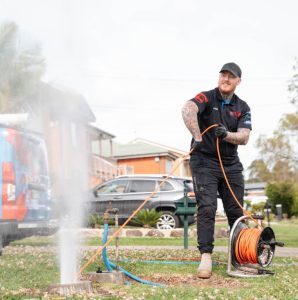
Modern leak detection does not mean ripping up floors and cutting into walls speculatively. Licensed plumbers use a range of non-invasive tools to locate the source of a leak before any excavation or access work begins.
Thermal imaging cameras can detect temperature differences caused by escaping water behind walls or under floors. Acoustic listening devices can pick up the sound frequency of water escaping from a pressurised pipe. Pressure testing isolates sections of the pipe system to identify exactly where the loss is occurring.
This means that in most cases, a plumber can pinpoint the location of a leak with a high degree of accuracy before causing any damage to your home.
Why Acting Early Matters
The cost of repairing a hidden leak scales quickly with how long it has been running. In the early stages, the repair may involve nothing more than fixing the pipe itself. If left for months, the damage can extend to structural timbers, wall linings, flooring materials, and in some cases the concrete slab. Mould remediation adds further cost and complexity.
If you have two or more of the signs listed above, call a licensed plumber and ask about leak detection. It is a far better outcome to investigate and find nothing than to ignore the signs and discover the extent of the damage six months later.