



Table Of Contents
Bathroom drains handle various substances daily. Hair, soap, toothpaste, shaving cream, and personal care products all travel through the pipes. Over time, these materials begin to collect inside the drain and eventually cause a blockage.
At first, the problem may seem small. Water drains slowly, and a faint smell appears. Then one day, the sink stops draining properly, or the shower fills with water.
The good news is that blocked drains in Sydney can be cleared using a few basic tools and a simple approach. In this blog, we’ll walk you through how to clean your drains properly and help restore normal water flow.
Tools You Need
Measuring cup
Used to measure ingredients accurately so the cleaning mixture flows into the drain evenly and works more effectively.
Plunger
Helps create pressure inside the drain to loosen minor blockages and improve water flow.
Toilet auger
A specialised tool designed to reach deeper into toilet pipes and remove stubborn clogs that a plunger cannot clear.
Materials for Cleaning the Drain
Bi-carb (Baking) soda
Helps loosen grime, grease, and organic matter.
Enzyme drain cleaner
Contains enzymes that break down hair, soap residue, and waste that commonly build up inside bathroom drains.
White vinegar
Works with bi-carb soda to create a bubbling reaction that helps clean the inside of the drain.
How to Tackle It Step by Step
Sink Drain
Start by running hot tap water for about 20–30 seconds to warm the pipes and soften any residue inside the drain. This helps prepare the drain for the cleaning solution.
Next, follow these steps:
- Pour one cup of bi-carb soda directly into the sink drain. Try to get as much of it into the pipe as possible rather than letting it sit on the surface.
- Slowly pour one cup of white vinegar into the drain. The mixture will begin to fizz, which helps loosen soap scum, grime, and debris.
- Place the sink plug or a drain cover over the opening to keep the reaction inside the pipe where it works best.
- Leave the mixture in the drain for 10 to 15 minutes so it can break down the build-up causing the clogged drain.
- Finish by flushing the drain with hot water from the tap for about a minute to wash away the loosened material.
If the water is still draining slowly, repeat the process once more.
Shower Drain
Start with a simple manual clean before using any products.
- Remove the drain cover using a screwdriver if needed.
- Use gloves and pull out any visible hair or debris sitting near the top of the drain.
Once the visible debris is cleared, move on to cleaning the pipe.
- Apply an enzyme drain cleaner according to the instructions on the product label.
- Allow the cleaner to sit in the drain for the recommended time so it can break down soap build-up and organic material.
- Rinse the drain with cool water afterwards to flush everything through.
If the shower is still draining slowly, you can repeat the process or leave the cleaner in the drain for a longer period before rinsing.
Bathtub Drain
Start by accessing the drain area.
- Remove the bathtub drain stopper or overflow plate, depending on the type installed.
- Wear gloves and remove any visible hair or debris sitting just inside the drain opening.
- Use a drain snake to reach deeper into the pipe and pull out trapped hair.
Once the physical debris is removed, clean the pipe to improve flow.
- Run hot tap water for about 30 seconds to soften soap and oil residue.
- Pour bi-carb soda into the drain, followed by white vinegar to help break down grime.
- Allow the solution to sit for 10 to 15 minutes so it can loosen any remaining build-up.
- Flush the drain thoroughly with hot tap water to move the debris through the pipe.
Toilet Drain
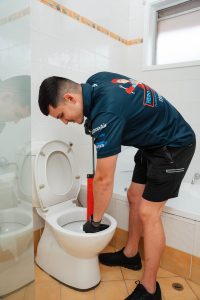
The first tool to use is a plunger.
- Make sure there is enough water in the toilet bowl to cover the plunger head.
- Position the plunger firmly over the drain opening to create a tight seal.
- Push down and pull up steadily for 15 to 20 seconds while keeping the seal intact.
- Repeated motion helps move the blockage through the pipe.
If the toilet remains blocked, the next step is to use a toilet auger.
- Insert the auger cable carefully into the toilet bowl and guide it into the drain.
- Turn the handle slowly so the cable moves deeper into the pipe.
- Continue rotating until you feel resistance, which indicates the location of the blockage.
- Keep turning gently to break apart or hook the obstruction.
- Pull the auger out slowly and dispose of any debris attached to it.
- Flush the toilet to check if the clogged drain has cleared.
Situations Where a Plumber Is Needed
DIY methods are effective for minor issues. However, some situations require professional help. You need assistance if:
- The same drain becomes blocked repeatedly
- Multiple drains stop working at the same time
- Water backs up into sinks or showers
- Toilets overflow frequently
- You hear unusual sounds coming from pipes
These signs point to a deeper plumbing issue rather than a minor clog that can be cleared with basic cleaning methods.
Conclusion
Cleaning your bathroom drains is simple. With a few tools, the right materials, and a bit of effort, you can clear minor blockages yourself.
By following the steps in this blog, you can keep your bathroom drains flowing properly and avoid larger plumbing issues later on. However, if the blocked drain keeps returning or the water still isn’t draining as it should, our team of plumbers in Sydney is available to help.
You can contact Hero Plumbing on 02 9137 8549 or submit a request through the online form to book a service and get your bathroom drains back to normal.